How to Grow Lavender in Pots Without Wet Roots
- A pot can solve bad soil, but it cannot excuse bad drainage
- Choose the plant before choosing the decorative urn
- Give water an exit
- Use container mix, not garden soil in a bucket
- Put the pot in actual full sun
- Water deeply, then wait for evidence
- Feed cautiously
- Prune within green growth
- Make a winter plan before the first hard freeze
- Troubleshoot from the roots outward
A pot can solve bad soil, but it cannot excuse bad drainage
Lavender in a container gets a movable patch of full sun and a root zone you can control. That is useful where garden soil is heavy, winter rain is relentless, or the only available ground belongs to a balcony. The pot must release water freely, the mix must hold air, and the plant must suit your climate. Lavender tolerates drought after establishment; it does not enjoy living in botanical soup.
Begin with a properly named plant. English lavender (Lavandula angustifolia), lavandins (Lavandula × intermedia), Spanish lavender (Lavandula stoechas), and tender types differ in mature size, bloom, and cold tolerance. Read the nursery label and check a regional extension source. “Lavender” alone is a fragrance description wearing a gardening hat.
Choose the plant before choosing the decorative urn
Match mature width to the space and pot. Compact cultivars are easier on a small patio than a vigorous lavandin. If you expect the plant to remain outdoors in winter, verify the cultivar's hardiness for your climate and remember that roots in containers are less insulated than roots in the ground.
Inspect a nursery plant before purchase. Look for dense healthy growth, a stable root ball, no sour smell, and no blackened base. A few woody inner stems can be normal; widespread dieback, permanently wet mix, or roots circling in a solid mat require more care than a cheerful flower spike reveals.
If the intended use is culinary, buy a correctly identified culinary lavender from a supplier who can tell you how it was grown. An ornamental label does not promise food suitability. If pets can reach the patio, note that the ASPCA lists common/English lavender as toxic to dogs, cats, and horses. Prevent chewing and contact a veterinarian after suspected ingestion or symptoms.
Give water an exit
Use a container with open drainage holes. One adequate central hole or several smaller holes can work, but they must not be sealed by a flat surface, attached saucer full of water, or decorative outer pot. Raise the base on pot feet if the patio blocks drainage.
Do not place gravel inside the bottom to “improve” drainage. Illinois Extension explains that water can perch in the mix above a gravel layer, leaving roots wetter rather than drier. Fill the pot with a consistent, suitable container medium and let the holes do their job.
Choose a pot only modestly larger than the current root ball. Overpotting surrounds a small plant with a large volume that dries slowly; underpotting leaves mature roots cramped and thirsty. Move up in sensible increments and use the cultivar's mature size as a long-term guide rather than dropping a plug into an urn large enough to bathe a spaniel.
Terracotta breathes and dries relatively quickly but can need more summer monitoring and may crack in freeze-thaw weather. Glazed ceramic and plastic retain moisture longer. Dark pots heat roots in strong sun. Material changes the watering rhythm; it does not change lavender's need for drainage.
Use container mix, not garden soil in a bucket
Garden soil alone compacts in pots and drains poorly. Use a high-quality, free-draining potting mix appropriate to lavender and your climate. Avoid mixes with heavy water-retaining features or added fertilizer when the plant and local guidance do not require them. Illinois Extension's lavender guide emphasizes full sun, extremely well-drained soil, and good airflow.
Do not invent a universal recipe from arbitrary handfuls of sand. Fine sand can make some mixes denser, and regional materials behave differently. Ask a local nursery or extension service for a proven container mix. If amending a commercial mix, measure and label the recipe so success can be repeated.
Set the plant at the same depth it grew in its nursery pot, with the crown above any mulch. Tease only tightly circling outer roots; do not dismantle the whole root ball. Backfill, firm gently, water thoroughly, and let the pot drain.
An inorganic surface mulch such as clean gravel may help keep the crown dry, provided it does not block inspection or bury stems. This is different from a hidden drainage layer. The top dressing lives on top; water still exits through holes below. The gravel has finally been given a legitimate job.
Put the pot in actual full sun
Most lavender needs at least six hours of direct sun, and many guides recommend more. Observe the site across the day rather than trusting that a bright balcony is sunny. Nearby walls, railings, and trees make seasonal shadows.
Acclimate a greenhouse-grown plant gradually to intense outdoor sun and wind. Start with protected light, increase exposure over several days, and shelter it from unseasonable cold. Sudden all-day sun can scorch tender foliage even on a species that ultimately loves the position.
Space the pot so air can move around the plant. Do not wedge it between a wall and dense foliage. Good airflow helps leaves dry and makes pests or stem decline visible.
Water deeply, then wait for evidence
After planting, water thoroughly until excess runs from the holes. Empty the saucer. Thereafter, feel into the mix and judge the pot's weight. Water when the root zone has dried appropriately, soaking evenly and draining fully rather than giving daily sips to the surface.
New plants need closer attention while roots establish. Mature lavender is drought-tolerant in the ground, but container plants have limited soil and may need regular water in heat. Wind, pot material, plant size, and season all change demand. The correct schedule is a feedback loop, not “every Sunday unless brunch.”
Water at the mix surface and avoid saturating the crown. Morning is practical because stray wet foliage can dry. Never leave the inner pot standing in water inside a cachepot. Check after heavy rain even when you did not irrigate; weather can overwater on your behalf.
Wilting does not always mean dry. Saturated, damaged roots can also fail to supply foliage. Test the mix before adding water. If it is persistently wet, slide the root ball out carefully, inspect for brown mushy roots or a sour smell, and seek local diagnostic guidance. Fix blocked drainage and shelter from rain; do not compensate with fertilizer.
Feed cautiously
Lavender generally performs in lean soil, and excess fertility can produce soft foliage and fewer flowers. Do not add routine high-nitrogen feed unless the product and a credible local recommendation support it. If growth is poor, check sun, drainage, roots, pot size, and pH before assuming hunger.
White crust on the pot or mix can indicate salt accumulation from water or fertilizer. Confirm the cause and local water conditions. Flushing is useful only when drainage is excellent and the diagnosis fits; a saturated lavender is not improved by a cleansing flood performed for symbolism.
Prune within green growth
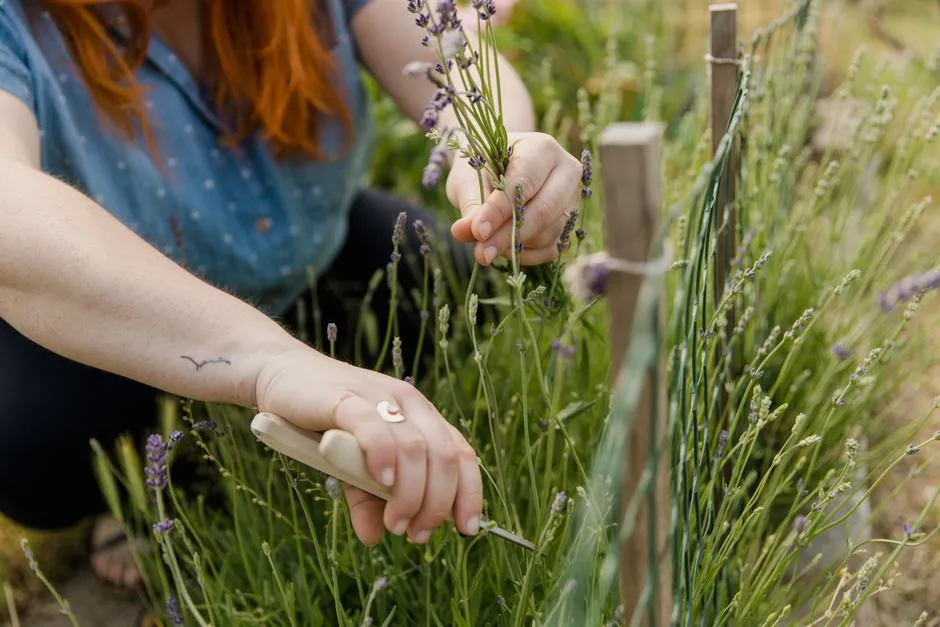
Harvest flowers and trim the plant to maintain a rounded shape, but keep cuts above leafless old wood. Lavender does not reliably reshoot from bare woody stems. The lavender pruning guide shows how to trace live growth and adjust timing for cold or wet winters.
Use clean snips. Remove dead or diseased material separately and identify the cause. Do not shear a newly transplanted or drought-stressed plant heavily. A small plant needs leaves to establish roots, not a premature topiary career.
If you want fragrant buds, follow the harvest and drying guide and verify culinary status before food use. Garden lavender and concentrated lavender essential oil are not interchangeable ingredients.
Make a winter plan before the first hard freeze
Container survival depends on lavender type, local lows, duration of cold, winter moisture, wind exposure, and pot construction. Check the label and local extension advice. Even a lavender rated hardy in the ground may be vulnerable in an exposed pot because its roots experience stronger temperature swings.
Move suitable hardy pots to a sheltered position protected from excessive winter rain while retaining light and airflow. An unheated cold frame or greenhouse may be appropriate in some climates. Do not move a dormant hardy lavender into a warm dim living room and expect it to regard this as a spa holiday.
Protect breakable pots from freeze-thaw cycles. Grouping or insulating containers can moderate swings, but never wrap drainage holes or trap moisture around the crown. Water sparingly according to actual need during dormancy; do not let roots remain wet.
Tender lavender types may need frost-free overwintering with strong light. Inspect for pests before moving plants indoors and acclimate them. If suitable conditions are unavailable, growing a tender type as an annual is more honest than promising survival through a dark cupboard.
Troubleshoot from the roots outward
For yellowing or browning, check in order: mix moisture, open holes, standing water, root condition, sun, temperature injury, and pests. For few flowers, review light and excess fertilizer. For split or woody growth, review the pruning history rather than cutting harder.
Record watering dates only long enough to learn the pot's rhythm; do not let the log override a wet root zone. Note the plant's full name and winter response. That information turns next season's decisions from folklore into gardening.
A successful lavender pot is not maintained by neglect. It is maintained by attentive restraint: sun without sudden scorch, water without residence, feeding without flattery, and pruning without entering bare wood. The plant supplies the perfume. Your main contribution is an exit route for rain.