How to Propagate Lavender From Cuttings
- The short method
- What should you gather first?
- Which lavender shoots make good cuttings?
- How do you prepare and insert a lavender cutting?
- How much light, water, and humidity do cuttings need?
- How can you tell whether roots have formed?
- How should rooted lavender be potted up?
- What usually goes wrong?
- Does a cutting keep the parent lavender's identity?
- Sources
The short method
To propagate lavender from cuttings, choose healthy, non-flowering side shoots and place their prepared stems in a clean, free-draining propagation medium. Keep the medium evenly moist rather than wet, give the cuttings bright indirect light, and maintain moderate humidity while roots form. Rooting time varies with the lavender, the maturity of the stem, and the conditions, so use root development—not a promised number of days—as the signal to pot up.
This method also preserves the parent plant's genetic identity. That is useful when you want another plant with the same growth habit or flower colour. It does not guarantee that every cutting will root, and it does not turn an unidentified lavender into a culinary herb.
What should you gather first?
Set out the materials before cutting a stem from the parent plant:
- a healthy, positively identified lavender plant
- sharp, clean snips or a clean knife
- clean pots or cell trays with drainage holes
- fresh, disease-free propagation medium that holds some moisture while allowing air around the stem
- plant labels and a waterproof pencil
- a clear cover or loose plastic bag, if your room is dry
- rooting hormone, if you choose to use it
Do not use compacted garden soil in a small propagation pot. A cutting has no working root system at first, so the medium must balance moisture with oxygen. A commercial seed-starting or propagation mix can work; perlite or another coarse ingredient is commonly used to increase air space. Start with clean containers and fresh medium rather than material taken from a pot with a history of rot or pests.
If you use rooting hormone, read and follow its label. Apply only as directed, and dispense a small working amount separately rather than dipping stems into the main container. Rooting hormone is optional; it is not a reason to ignore stem quality, sanitation, or moisture control.
Which lavender shoots make good cuttings?
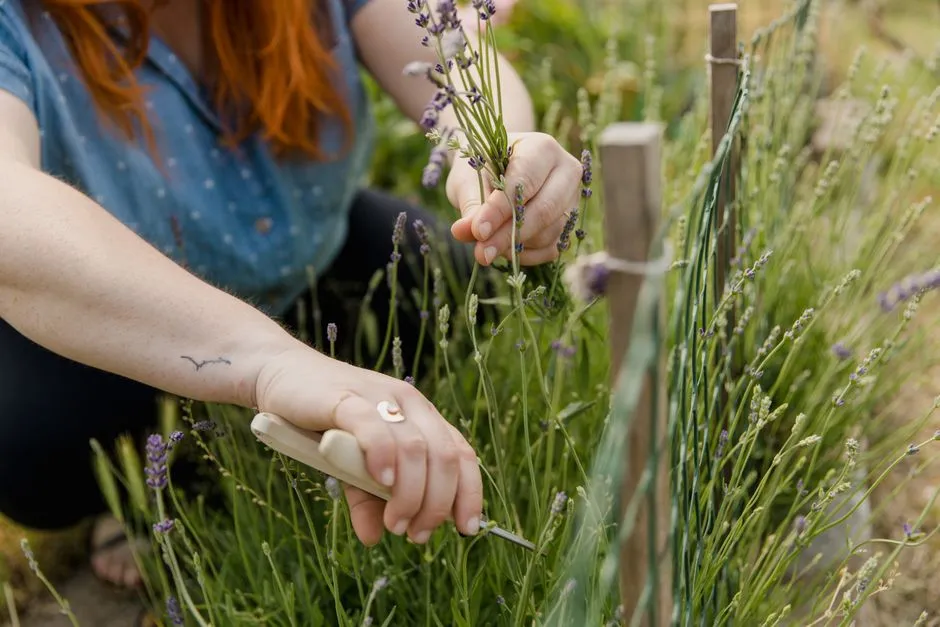
Begin with a parent plant that is growing normally and shows no obvious pests, spotting, dieback, or rot. Iowa State University Extension identifies stem cuttings from non-flowering side shoots as the most reliable way to propagate lavender. Avoid stems carrying flowers or developing buds. A cutting with flowers must support them while it is also trying to form roots.
Young, flexible growth and firmer semi-ripe growth can both be used, depending on the season and plant. The Royal Horticultural Society recommends softwood or semi-ripe lavender cuttings from young plants in early to midsummer, with hardwood cuttings as another option after flowering in late autumn. Those seasons describe UK growing conditions, not universal calendar dates. Let the state of the plant and advice from a local horticultural service guide timing in your climate.
Take several modest cuttings rather than stripping one section of the parent. A practical tip cutting is about 3 to 5 inches long and has several leaves and at least two nodes. A node is the point where a leaf joins the stem. Label each batch immediately with the species or cultivar name and the date, especially if several lavenders grow together.
How do you prepare and insert a lavender cutting?
Work in the shade so fresh cuttings do not heat or dry while you prepare them.
- Make a clean cut just below a node. Keep the upper tip intact.
- Remove any flower or bud. Strip the leaves from the lower section that will enter the medium, leaving a small cluster of healthy leaves at the top.
- Pre-moisten the propagation medium and let excess water drain. It should feel evenly damp, not saturated.
- Use a pencil or dibber to make a hole. This prevents the medium from scraping rooting hormone from the stem, if used.
- Insert the bare portion of the stem so at least one node is below the surface and no leaves are buried.
- Gently firm the medium around the stem, then label the pot.
Several cuttings can share a wider pot if their leaves do not touch and air can move between them. Individual cells make it easier to remove one failed cutting without disturbing the rest. Either arrangement works if the container drains freely.
How much light, water, and humidity do cuttings need?
Put the pot in bright, indirect light. Do not place a clear-covered pot in direct sun: heat can build rapidly inside the cover and damage the cuttings. Illinois Extension recommends increased humidity for unrooted cuttings, along with ventilation when they are enclosed.
A clear dome or loose plastic bag can slow water loss, but it should not seal wet leaves into stagnant air. Prop the bag away from the foliage and open it when condensation is heavy or the leaves stay wet. Iowa State's lavender guidance calls for moderate humidity, not a saturated chamber.
Check the medium with a finger rather than watering by schedule. Add water when the surface is beginning to dry, then allow it to drain. Constantly soggy medium deprives the stem of air and encourages decay. Lavender's established preference for drainage still matters during propagation, even though an unrooted cutting must not be allowed to dry out completely.
Do not fertilize a fresh cutting. It cannot use fertilizer as an established root system would. Once it has rooted, been potted, and started active growth, follow the product label and local guidance rather than feeding by a fixed timetable.
How can you tell whether roots have formed?
New-looking top growth is encouraging, but it is not conclusive: a cutting can draw on stored resources before it has made useful roots. Avoid repeated tug tests, which can break tender new roots.
Instead, watch for sustained growth and roots visible at a drainage hole or along a clear cell wall. If you need to check, lift one test cutting carefully from the side with some medium around it. Illinois Extension advises potting individual cuttings when roots are about an inch long. Treat that as a practical inspection point, not a deadline.
Rooting time varies by plant and conditions. If the leaves remain healthy but roots are still short, give the cutting more time. If the stem base turns black or soft, remove that cutting promptly. Clean the tool before using it on another stem and review the moisture, air movement, and cleanliness of the setup.
How should rooted lavender be potted up?
Move a rooted cutting into a small pot with drainage holes and a free-draining potting mix. Keep the root ball and attached propagation medium together as much as possible. A pot only slightly larger than the roots is easier to water accurately than a large container that stays wet for too long.
If the cutting grew under a cover, reduce humidity gradually over several days. Open the cover for longer periods before removing it completely. Keep the newly potted plant in bright, sheltered light while it adjusts, then increase direct sun gradually. Sudden exposure to full outdoor sun, wind, or cold can stress soft growth.
The guide to growing lavender in pots explains drainage, container size, and outdoor placement after establishment. As the plant branches, use the principles in how to prune lavender without cutting deeply into old, leafless wood. More cultivation guidance is collected in Grow Lavender.
What usually goes wrong?
The cutting wilts within hours. The stem may have dried between cutting and insertion, or the air may be too dry. Prepare pots first, work out of direct sun, insert stems promptly, and add a ventilated clear cover if needed.
The stem base becomes brown, black, or soft. The medium may be saturated, the container may drain poorly, or contaminated material may be involved. Remove affected cuttings. Do not try to rescue rotting tissue in the same wet setup.
Grey or white growth appears on leaves or medium. Remove affected material and increase ventilation. Keep leaves from touching, avoid leaving water on the foliage, and reassess how often the medium is being watered.
The cutting stays green but does not root. Check whether it came from flowering growth, whether the stem was overly woody, and whether conditions swing between wet and dry. Do not compensate with extra fertilizer or a stronger-than-labelled dose of rooting hormone. Start another small batch from suitable growth when the plant is ready.
A rooted cutting declines after potting. The change in humidity, light, or root-zone moisture may have been too abrupt. Return it to sheltered bright light, keep the mix lightly and evenly moist, and make environmental changes gradually.
Does a cutting keep the parent lavender's identity?
Vegetative propagation produces a plant genetically identical to its parent, so a correctly labelled cutting is a practical way to preserve a named lavender. Seed-grown offspring can vary. Genetics, however, are only part of identity and safe use.
Keep the original label with the cutting through every pot change. If the parent plant is not positively identified, treat the new plant as unidentified too. Do not infer culinary suitability from fragrance, flower colour, or the fact that a stem rooted successfully. Before using home-grown lavender in food, confirm the species or cultivar and know the plant's pesticide and treatment history.
Propagation is also separate from essential-oil use. A rooted lavender plant is not a basis for making dosing, ingestion, or health claims. The purpose here is simply to produce another accurately labelled garden plant.