Is Lavender Safe to Eat or Drink? Plant vs. Oil
- Is lavender safe to eat or drink?
- Which forms belong in food and drink?
- Choose lavender that was actually meant for the kitchen
- How do you make lavender tea with buds?
- How do you use lavender in baking and drinks?
- Why essential oil is a different product
- What about oral lavender capsules or special food flavorings?
- Does lavender tea make you sleep or reduce anxiety?
- Who should ask before drinking lavender tea?
- What should you do if someone swallows lavender oil?
- A five-question check before lavender enters a cup
Is lavender safe to eat or drink?
Lavender is likely safe in the small amounts normally used as food, according to the U.S. National Center for Complementary and Integrative Health (NCCIH). Use positively identified, food-intended flowers or buds in tea and cooking. Do not put drops from a lavender essential-oil bottle into water, tea, or food. Essential oil is a concentrated extract, and Poison Control warns that swallowed lavender oil can cause gastrointestinal, neurologic, and respiratory effects.
The object in your hand decides the rule. A teaspoon of dried culinary buds is not a teaspoon of essential oil. A tea bag is not a diffuser refill. A standardized oral product studied by researchers is not permission to improvise a dose from an aromatherapy bottle.
If the product label does not explicitly identify it as food and give directions for that food use, keep it out of the kitchen. If you are pregnant, breastfeeding, taking medicines, preparing lavender for a child, or using it for a health purpose, ask a clinician or pharmacist about the exact product before using it.
Which forms belong in food and drink?
| Form | Kitchen use? | What to check |
|---|---|---|
| Fresh lavender flowers | Sometimes | Positive plant identification, food-crop treatment history, clean harvest |
| Dried lavender buds | Yes, when sold or grown for food | Botanical identity, ingredient list, food-intended label, clean storage |
| Commercial lavender tea | Yes, as labelled | Ingredients, allergens, serving directions, warnings |
| Lavender extract or flavor | Only if made and labelled for food | Manufacturer's exact recipe amount and storage directions |
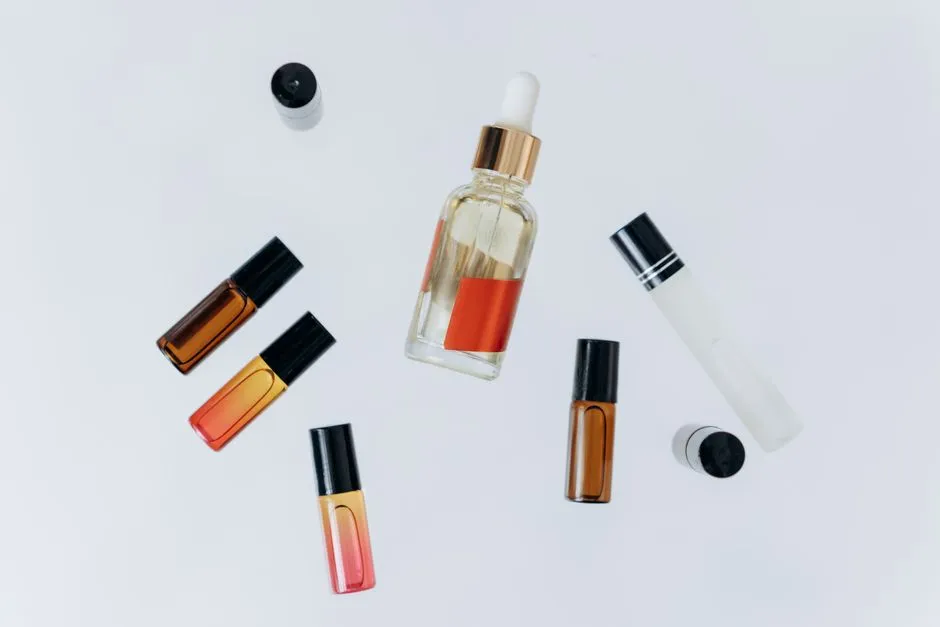
| Lavender essential oil for aromatherapy or topical use | No | Do not swallow or add to a recipe |
| Fragrance oil | No | It may contain non-food ingredients; never use it as flavoring |
| Hydrosol or floral water | Only when explicitly food-intended | Ingredient list, food-use directions, refrigeration and use-by instructions |
| Lavender capsule or oral product | Not an ordinary food | Use only with product-specific professional guidance |
These categories cannot be made interchangeable by using less. One tiny drop from the wrong bottle is still the wrong ingredient.
Choose lavender that was actually meant for the kitchen
For homegrown lavender, begin with a permanent plant label. English lavender (Lavandula angustifolia) is widely used for culinary purposes because its flowers tend to have a sweeter, less camphor-heavy character than many hybrids. Illinois Extension identifies lavender as suitable for beverages and dishes with pork, fish, or chicken, while advising cooks to use it sparingly.
Species is only the first check. Do not eat florist stems, craft lavender, potpourri, roadside flowers, or an unidentified ornamental plant. Confirm that anything applied to the plant was labelled for that edible crop and that every harvest interval was followed. Keep material exposed to pet waste, roadside contamination, mold, or unknown sprays out of food.
For a purchased bag, read beyond the word “lavender.” Look for a single food ingredient, a botanical name when provided, a food-use statement, a lot or best-by code, intact packaging, and supplier contact details. “Culinary grade” is a useful shopping cue, not a universal promise that substitutes for the rest of the label.
Our harvest-and-dry guide covers identification, treatment history, rinsing, airflow, dryness tests, and labelled storage. A pretty dried bundle intended for a vase remains a craft product unless you can establish the food history.
How do you make lavender tea with buds?
University of Illinois Extension gives a clear one-cup method: 1 teaspoon of dried lavender or 2 teaspoons fresh in boiling water, steeped for 3 to 5 minutes. Use identified culinary lavender, not essential oil.
For one cup:
- Wash your hands and use a clean cup and strainer.
- Measure 1 teaspoon dried culinary flowers, or 2 teaspoons clean fresh culinary flowers.
- Pour over 8 fluid ounces (237 ml) freshly boiled water.
- Steep for 3 minutes, then taste. Continue to 5 minutes if you want a stronger cup.
- Strain completely. Add lemon, honey, or another tea only after tasting the plain infusion.
Lavender moves quickly from floral to soapy. A longer steep is not more healthful; it is simply stronger. For a gentler first cup, blend part of the measured lavender with mint or black tea rather than doubling the flowers.
Make only what you intend to drink, or refrigerate the strained tea within two hours. Keep prepared tea cold at 40 F (4 C) or below and discard it if its smell, appearance, or container changes unexpectedly.
How do you use lavender in baking and drinks?
Dried buds work best when a tested recipe supplies the amount. Typical routes include infusing warm milk or cream and straining it, grinding a measured amount with sugar, steeping it in a syrup, or blending it with another tea. Illinois Extension also notes that lavender can flavor beverages and savory dishes, and that a little goes a long way.
Do not convert “lavender” in an ingredient list to essential-oil drops. If a recipe calls for dried buds, use dried buds. If it calls for a specific food flavor or extract, use that exact kind and follow the maker's measure. Oil and water do not mix evenly, so a drop stirred into a cup does not become predictably diluted.
When serving other people, name lavender as an ingredient. Keep the package or plant record available in case someone needs to check the source. Anyone with a known allergy to lavender or a related ingredient should not be reassured by the small quantity.
Why essential oil is a different product
Essential oil is the concentrated volatile fraction obtained from plant material, commonly by distillation. Dried buds contain aromatic compounds too, but the concentration, composition, and intended route are not equivalent.
Poison Control's lavender-oil guidance states that lavender oil is toxic if swallowed. It lists possible throat and stomach irritation, nausea, vomiting, abdominal pain, diarrhea, abnormal gait, confusion, severe drowsiness, and breathing difficulty, with small children at particular risk from small amounts. It also warns about eye injury, skin reactions, and flammability.
That is why this site does not provide a home dilution for drinking essential oil. Adding oil to water, honey, milk, alcohol, or a capsule does not turn an aromatherapy product into an evaluated oral product. “Pure,” “natural,” and “therapeutic grade” do not establish a safe route or dose.
The rule applies even though 21 CFR 182.20 lists lavender among natural flavoring materials that are generally recognized as safe for their intended use. “Safe for an intended use” is not “every bottle is safe by every route.” Food manufacturers work with defined ingredients and formulations. A home cook holding a diffuser bottle does not have the same specification or process.
For topical and diffuser questions, use the site's lavender essential-oil safety guide. It covers label checks, exact manufacturer dilution, ventilation, eye exposure, pets, storage, and when to stop using a product.
What about oral lavender capsules or special food flavorings?
NCCIH notes that some oral lavender products have been studied and might be safe in the short term at the amounts tested. It also reports possible diarrhea, headache, nausea, and burping. This does not contradict the warning about swallowing a household essential-oil bottle; it describes particular products used in particular amounts.
Do not recreate a researched capsule with loose oil, substitute one brand for another, or assume a study dose applies to you. Dietary supplements are regulated differently from drugs, and NCCIH notes that supplements are not approved by the U.S. Food and Drug Administration before sale. A clinician or pharmacist can review the exact ingredient, strength, medicines, conditions, and intended use.
Likewise, a food manufacturer may sell a lavender extract or flavor specifically formulated for recipes. Use only its labelled amount. If the label says external use, aromatherapy, diffuser, cosmetic, fragrance, or “not for internal use,” it is not a kitchen ingredient.
Does lavender tea make you sleep or reduce anxiety?
Do not promise that it will. Lavender scent and tea are commonly associated with winding down, and the ritual of a warm, caffeine-free cup may feel restful. That is an experience, not a diagnosis or treatment result.
The NCCIH lavender evidence review says more high-quality research is needed for reliable conclusions. It describes evidence for anxiety, stress, depression symptoms, sleep quality, and other uses as limited or unclear, and preliminary findings should be interpreted cautiously.
Enjoy culinary lavender for flavor if it suits you. Do not use it to delay care for persistent insomnia, anxiety, depression, pain, breathing symptoms, or another health concern. A beverage can be pleasant without carrying a medical job description.
Who should ask before drinking lavender tea?
Ask a clinician or pharmacist about the exact tea, herb, extract, or supplement before oral use if you:
- are pregnant or breastfeeding, because NCCIH says little is known about safety in these periods;
- take prescription, over-the-counter, or other herbal products, especially anything sedating;
- have an upcoming procedure or surgery;
- are preparing it for a baby or child;
- have a history of plant, pollen, or contact allergies;
- have a condition that changes swallowing, alertness, liver function, or medicine handling;
- want to use lavender to manage a symptom or diagnosed condition.
NCCIH describes theoretical interaction concerns with sedative medicines or herbs and specifically advises medicine users to speak with a healthcare provider. A gardening publication cannot clear an individual combination.
Stop drinking the tea and seek appropriate advice after hives, swelling, wheezing, severe stomach symptoms, marked drowsiness, or another concerning reaction. Trouble breathing, collapse, seizure, severe confusion, or swelling of the face or throat requires emergency help.
What should you do if someone swallows lavender oil?
Treat a swallowed essential oil as a poison exposure. Do not wait for symptoms and do not induce vomiting or give a home remedy unless a poison professional instructs you to do so.
In the United States, use webPOISONCONTROL or call Poison Control at 1-800-222-1222. Outside the United States, contact the local poison center or emergency service. Keep the bottle or label with you so the specialist can identify the product, concentration, amount, route, and time.
Call emergency services immediately for trouble breathing, seizure, collapse, inability to wake, or another severe symptom. Keep other people and pets away from the bottle and any spill while help is arranged.
A five-question check before lavender enters a cup
- Is this the identified flower or bud, a commercial tea, or another product explicitly labelled for food?
- Can I verify its plant or product identity and treatment history?
- Does a tested recipe or manufacturer label give the exact amount for this form?
- Does anyone drinking it have a medicine, condition, pregnancy, breastfeeding, childhood, or allergy question that belongs with a clinician or pharmacist?
- Is the essential-oil bottle closed and stored away from food, children, and pets?
If any answer is uncertain, pause. Lavender buds can wait in their labelled jar while you establish what they are. Essential oil stays out of the cup.